

Dog ear infections are one of the most common reasons pets visit the veterinarian. If your dog is shaking their head, scratching their ears, or showing signs of discomfort, prompt treatment can provide fast relief and prevent more serious problems.
Ear infections are especially common in areas like Huntington Beach, where allergies and environmental factors can contribute to chronic ear issues.
At Huntington Beach Pet Hospital, we provide same-day evaluation and treatment for dog ear infections in Huntington Beach.
Call (714) 962-3639 to schedule an appointment.
Signs of an Ear Infection in Dogs
Ear infections can develop quickly and become painful.
Common symptoms include:
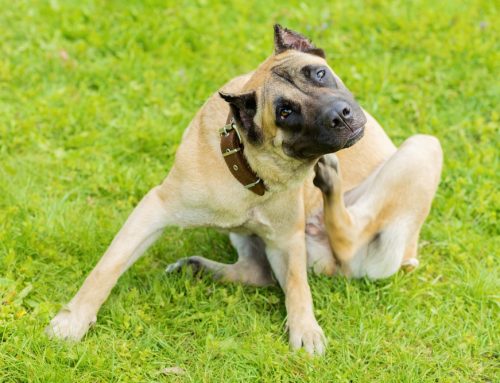
- Head shaking
- Scratching at the ears
- Redness inside the ear
- Odor from the ears
- Discharge (brown, yellow, or black)
- Sensitivity when the ear is touched
If your dog is showing these signs, it’s best to have them evaluated early.
What Causes Dog Ear Infections?
Ear infections are usually caused by an underlying issue.
Common causes include:
- Allergies (very common in Southern California)
- Moisture in the ears (swimming or bathing)
- Bacteria or yeast overgrowth
- Ear mites (especially in younger pets)
- Foreign material (grass, debris)
Many dogs have more than one contributing factor.
Why Proper Diagnosis Matters
Not all ear infections are the same.
At Huntington Beach Pet Hospital, we use ear cytology (microscopic evaluation) to determine:
- Whether bacteria are present
- Whether yeast is present
- The severity of infection
This allows us to choose the correct medication instead of guessing.
Learn more about testing on our Diagnostics services page.
Dr. Lewis’s Approach to Dog Ear Infections
At Huntington Beach Pet Hospital, we take a diagnostic-driven approach rather than simply prescribing medication.
When a dog presents with symptoms, we begin with a thorough ear exam. If infection is suspected, we perform an ear cytology, which is one of the most important parts of the visit.
Why Ear Cytology Is So Important
This test allows us to examine the ear under a microscope and determine exactly what is causing the infection.
It tells us:
- Whether bacteria are present
- How much bacteria is present
- Whether yeast is involved
- The type of bacteria (cocci vs. rods)
This distinction is critical.
- Cocci bacteria are common and often respond well to treatment
- Rod-shaped bacteria are more concerning and frequently resistant
When We Recommend a Culture
If an infection does not improve, we may perform an ear culture.
This test:
- Identifies the exact bacteria
- Determines which antibiotics will work
This is especially important for resistant infections.
Managing Pain and Inflammation
Most ear medications contain a steroid to reduce inflammation.
In more severe cases, we may also use:
- Steroid injections
- Oral medications
Reducing inflammation improves comfort and treatment success.
Proper Ear Care at Home
Treatment success depends heavily on proper home care.
We take time to show owners:
- How to apply medication correctly
- How to flush the ears safely
Improper technique is one of the most common reasons infections persist.
We also caution against alcohol-based cleaners in inflamed ears, as they can be painful and worsen discomfort.
Preventing Recurrence
Many dogs with repeated ear infections have underlying allergies.
Treating the infection alone is often not enough—long-term management is key.
Real Case: Chronic Ear Infection That Wouldn’t Resolve
Dr. Lewis treated a Golden Retriever with a chronic ear infection that had not improved after visits to two other veterinary hospitals.
Despite multiple medications, the dog continued to have odor, discharge, and discomfort.
During our evaluation, we identified several key issues.
- The owner had never been shown how to properly apply ear medication or flush the ears
- No ear cleaner had been sent home
- No ear culture had been performed
We performed an ear cytology followed by an ear culture, which revealed a resistant bacteria called Pseudomonas.
Based on this, we prescribed a custom ear medication containing Amikacin, specifically targeted to treat the infection.
- Within 2 weeks, the ear was significantly improved
- By 4 weeks, the infection had fully resolved
Why This Case Matters
- Resistant bacteria require targeted treatment
- Proper technique at home is critical
- Advanced diagnostics prevent repeated failed treatments
Real Case: Aural Hematoma (Ear Flap Swelling)
A Boxer presented with a swollen ear flap that felt like a balloon.
This condition, called an aural hematoma, occurs when blood accumulates inside the ear flap. It is most commonly caused by excessive head shaking or scratching—often due to an underlying ear infection (otitis externa).
In this case, the ear infection led to significant irritation, causing the dog to repeatedly shake his head.
The result was a painful, fluid-filled ear flap.
We were able to perform a same-day procedure under sedation, where:
- An incision was made along the inner ear flap
- The accumulated fluid was drained
- Multiple sutures were placed to keep the ear flat
The incision was intentionally left open to allow proper healing and help prevent recurrence.
Addressing both the hematoma and the underlying ear infection is critical for a successful outcome.
When Ear Infections Become Urgent
Seek veterinary care if your dog has:
- Severe pain
- Head tilt
- Loss of balance
- Swelling of the ear flap
- Crying or sensitivity
These signs may indicate a more serious condition.
Visit our Urgent Care page if you’re unsure.
Can You Treat an Ear Infection at Home?
Over-the-counter products may provide temporary relief but often do not address the underlying cause.
Incorrect treatment can delay healing or worsen the infection.

Dog Ear Infection Treatment in Huntington Beach
We provide treatment for dog ear infections in:
- Huntington Beach
- Costa Mesa
- Fountain Valley
- Westminster
If you are searching for dog ear infection treatment near you, we are here to help.
Help Your Dog Feel Better
Ear infections can be painful, but treatment is often very effective when addressed early.
Call (714) 962-3639
We can help your dog feel better quickly.
FAQ
How do I know if my dog has an ear infection?
Look for head shaking, odor, discharge, and scratching.
Are ear infections painful?
Yes, they can be very uncomfortable and should be treated promptly.
Why do ear infections keep coming back?
Often due to allergies or untreated underlying causes.
How long does treatment take?
Most improve within days, but full resolution varies.





Leave A Comment