

A Veterinarian’s Guide to Environmental Allergies, Itching, and the Best Treatment Options
By Andrew Lewis, DVM – Huntington Beach Pet Hospital
If your dog is constantly itching, scratching, licking, or chewing, you’re not alone. This is one of the most common reasons pet owners seek a veterinarian in Huntington Beach and throughout Orange County.
At Huntington Beach Pet Hospital, Andrew Lewis, DVM helps pet owners every day who are frustrated with ongoing skin issues, failed treatments, or temporary fixes.
Food Allergies vs Environmental Allergies in Dogs
One of the biggest misconceptions I see in practice is that itching in dogs is usually caused by food.
In reality, if a dog truly has allergies, over 75% are environmental (atopy), not food-related.
Food allergies are much less common than most people think. Studies suggest that only about 1–2% of all dogs have true food allergies, although the percentage is slightly higher in dogs already diagnosed with allergic skin disease.
The reason food allergies are relatively rare is that most dogs are continuously exposed to environmental allergens like pollen and dust mites, while dietary proteins typically do not trigger an immune response unless a true sensitivity has developed over time.
Environmental allergies include:
- Pollen
- Grasses
- Dust mites
- Mold
These allergens are present year-round in Southern California, especially in Huntington Beach and throughout Orange County.
“Most itchy dogs—especially those that lick their paws or legs frequently—are suffering from environmental allergies (atopy), not food allergies. One of the biggest mistakes I see is focusing on food too early and repeatedly changing diets at home instead of addressing the real cause.”
— Andrew Lewis, DVM
A Real Case from Huntington Beach Pet Hospital
A common case seen at Huntington Beach Pet Hospital involves a young dog (around 2 years old) with:
- Chronic paw licking
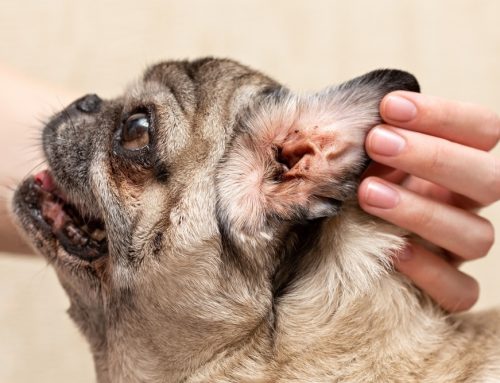
- Recurrent ear infections
- No improvement despite multiple food changes
Final diagnosis: Environmental allergies (atopy) combined with a secondary skin infection.
Why Some Dog Allergy Treatments Fail
Many dogs with skin issues are initially treated with antibiotics. However, this approach can fail if the full problem is not identified.
Antibiotics do NOT treat yeast infections.
If yeast is present and not diagnosed, the dog will continue to itch—even after treatment—leading to ongoing frustration and repeated vet visits.
If your dog has ongoing skin issues or you’ve tried treatments that haven’t worked, a more detailed dermatology evaluation may be needed. You can learn more about our approach to dog dermatology in Huntington Beach here:
Huntington Beach Pet Hospital Dermatology Page
Dermatology | Huntington Beach Pet Hospital
How We Diagnose Skin Infections: The “Tape Test”
At Huntington Beach Pet Hospital, Andrew Lewis, DVM performs a simple, highly effective diagnostic test:
- Clear tape is applied to the affected skin
- The sample is placed on a microscope slide
- It is stained and examined under magnification
No sedation is required.
This test allows us to quickly identify:
- Bacteria
- Yeast
- Or both
Best Dog Allergy Medications
Oral Medications (JAK Inhibitors)
- Apoquel
- Zenrelia
- Numelvi
These:
- Reduce itching
- Provide anti-inflammatory benefits even though they are not steroids.
Zenrelia may offer stronger anti-inflammatory effects in some cases.
- Prednisone (a steroid)
- Atopica – cyclosporine (immunosuppressant, calcineurin inhibitor)
- Various antihistamines
Cytopoint Injection
- Monoclonal antibody
- Not metabolized like oral drugs
- Targets itch only
Does NOT provide anti-inflammatory benefit
Simple Comparison
- Apoquel → fast + anti-inflammatory
- Zenrelia → fast + possibly stronger anti-inflammatory
- Numelvi → dogs as young as 6 months and similar benefits.
- Cytopoint → safest, no liver metabolism, but no anti-inflammatory benefit
How Treatment Is Chosen
Treatment decisions are based on age, severity, and clinical presentation.
- Under 9 months of age → we prioritize ruling out fleas, mites, and food allergies
- Over 10 months of age → we consider environmental allergies first, with food allergies as a secondary consideration
Once the likely cause is identified:
- Mild → Cytopoint
- Moderate/severe → oral medications
- Infection present → treat infection at the same time.
This approach helps avoid unnecessary diet changes and leads to more effective long-term control.
Steroid Injections
- Kenalog → short-lived
- Depo-Medrol → long-lasting, not reversible (Because its effects cannot be adjusted once given, this is typically avoided as a first-line treatment. When steroids are needed, I prefer using a tapering course of oral prednisone so the dose can be carefully adjusted to the lowest effective level.)
Topical Therapy
Used when beneficial:
- Douxo
- Welactin
- Dermoscent
Helps improve skin health and treatment success.
Why Some Veterinary Allergy Treatments Fall Short
If you’ve already tried treatments that didn’t work, you’re not alone. Many pet owners in Huntington Beach and across Orange County come to us after months of frustration.
There are a few common reasons why allergy treatment doesn’t always succeed initially.
In some high-volume clinics, appointments are necessarily shorter due to the number of patients being seen each day. When time is limited, it can be difficult to fully evaluate chronic skin conditions, perform in-house diagnostics like cytology (“tape tests”), and build a detailed long-term treatment plan.
In other settings—particularly larger corporate veterinary groups—there may be more emphasis on standardized protocols or efficiency. While these systems can be helpful in many situations, chronic allergy cases often require a more individualized and flexible approach.
Skin disease in dogs is rarely a quick fix. Successful treatment typically requires:
- Identifying and treating secondary infections (bacteria and yeast)
- Differentiating between environmental and food allergies
- Adjusting medications based on response
- Ongoing monitoring and follow-up
When these steps are rushed or skipped, symptoms often return—and owners are left feeling like nothing works.
Why Choose Huntington Beach Pet Hospital
At Huntington Beach Pet Hospital, Andrew Lewis, DVM focuses on:
- Proper diagnosis
- Treating infections
- Individualized plans
- Ongoing monitoring

Frequently Asked Questions About Dog Allergies
What is the most common cause of itching in dogs?
The most common cause of chronic itching in dogs is environmental allergies (atopy), especially in Huntington Beach and Orange County where allergens are present year-round.
How do I know if my dog has food allergies or environmental allergies?
Only about 1–2% of dogs have true food allergies. Most dogs with symptoms like paw licking, ear infections, and chronic itching have environmental allergies.
Why is my dog still itching after antibiotics?
Antibiotics only treat bacteria. If yeast is present, the itching will continue unless it is properly diagnosed and treated.
What is the best treatment for dog allergies?
Treatment depends on severity and may include oral medications (Apoquel, Zenrelia), Cytopoint injections, and treatment of secondary infections.
Is Cytopoint better than Apoquel?
They serve different roles. Cytopoint targets itch only, while Apoquel and similar medications also reduce inflammation.
When should I take my dog to a veterinarian?
If your dog has persistent itching, ear infections, red skin, or excessive licking/chewing, it’s time for an evaluation.
Huntington Beach Pet Hospital
8851 Adams Avenue
Huntington Beach, California 92646
If your dog is struggling with allergies or itching, early diagnosis and proper treatment can make a significant difference.






Leave A Comment